
Mentorship for Music Producers
Designed for producers who want more than tutorials.
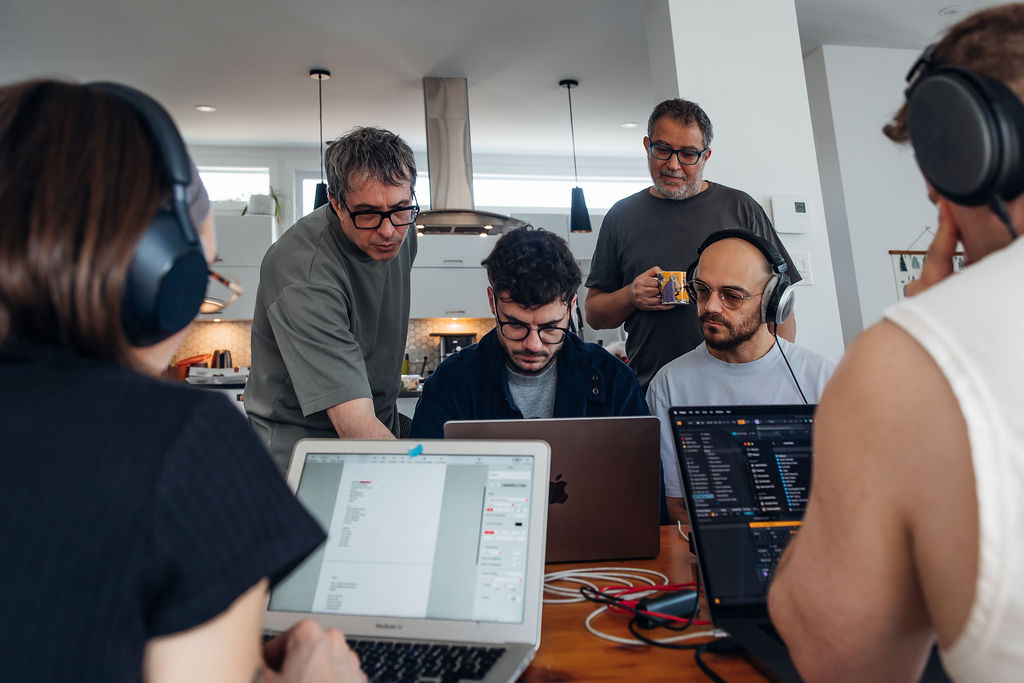
What Is This Program?
Build your workflow, finish more music, and develop a sustainable creative practice. A limited-seating mentorship program combining group sessions, individual guidance, feedback, and ongoing support.
Having access to all the tutorials, tools, plugins, and gear doesn’t mean things get easier. Most producers are looking for ways to bring it all together so that each studio session has a purpose and feels productive. This mentorship is for people who are dedicated to their goals and open to being guided.
Most producers struggle because they lack:
- clarity
- structure
- accountability
- feedback
- consistency
The Mentorship Program is designed to help you develop a repeatable workflow that allows you to create music regularly, finish projects, and build confidence in your decisions.
Rather than focusing on isolated techniques, we focus on the complete creative process.
Who Is It For?
This program is ideal for:
- Producers stuck with unfinished tracks
- Artists returning after a long break
- DJs wanting to jump into production
- Musicians struggling with workflow and organization
- Producers looking for regular feedback
- Artists preparing releases or live performances
- Anyone seeking long-term guidance rather than one-off consultations
No specific genre is required, although my experience is primarily rooted in electronic music, techno, ambient, dub, minimal, and experimental music.
How It Works
Monthly Group Sessions
The group sessions allow participants to:
- discuss current projects
- review challenges
- analyze workflows
- learn from other producers
- receive collective feedback
The goal is to create a small learning environment where everyone benefits from each other’s experiences.
Individual One-to-One Sessions
Each participant receives private sessions focused on:
- current projects
- workflow issues
- technical questions
- creative blocks
- production strategies
This is where we address your specific needs and goals.
Feedback Between Sessions
Participants can submit:
- tracks in progress
- arrangements
- mixes
- production questions
This allows momentum to continue between meetings rather than waiting until the next session.
What We Work On
Creating a reliable production process is essential. Many music producers possess the necessary skills and tools, but they often struggle to find a method that consistently yields results in the studio. This method, which we call “workflow,” is akin to a recipe in cooking—it provides a step-by-step approach to achieving the desired outcome. However, if the method fails, it’s important to have a Plan B to rely on. Once you identify how you work best, I can assist you in developing your own personalized workflow.
Learning how to transform ideas from initial concepts to completed releases is essential in music production. Many people view their progress in this field as simply finishing tracks. However, our focus is on developing tools that help us successfully complete projects while ensuring everything works cohesively together.
I’ve learned to create mock-ups, templates, macros, and various tools that are always available when you need them to solve specific problems. One of the challenges in finishing tracks is often not knowing where the bottleneck lies, and addressing this issue usually requires mentorship.
Creating sounds that align with your artistic vision is essential. To grasp the principles of sound design, you must first understand how sound behaves and the fundamentals that define a specific sound. We will explore synthesis, review some electro-acoustic principles, and develop a process for creating sounds from scratch. This foundation will then enable you to emulate the sounds you admire.
Understanding how music tracks develop over time and capture attention is essential in the creation of great music. To achieve this, we must study effective music-making techniques. From our studies, we can develop templates and methods for structuring your loops to yield positive results.
Learning how to arrange music is similar to writing a scene for a theatrical production or constructing a storyline for a film. It takes time, a rich vocabulary, and a grasp of how listeners perceive sound, as well as an understanding of how DJs use music to tell stories. When you integrate all these elements, you can transform simple arrangements into something powerful.
Ensuring that your music communicates clearly across different systems is essential. The art of mixing takes time, but once you understand how sound behaves and how to balance various elements, you’ll be able to prepare your song for mastering effectively.
Mixing involves conceding and compromising; it’s about fitting sounds within a narrative and a space. You’re not just blending sounds together; you’re also adjusting them over time. Production and mixing are interconnected—understanding mixing requires solid production skills.
Developing a recognizable voice and making stronger creative decisions is one of the most important aspects of this program. Artistic direction cannot be found in a tutorial; it requires a deep understanding of what sound resonates with you and how to create music that aligns with your artistic growth. This process involves discussions, listening to music, analyzing other artists, and making informed decisions. It’s not something to be taken lightly, but it’s a topic I am passionate about and love to explore with the people I work with.
My Approach
My mentorship approach mirrors the workflow I use in my own productions and client work. When I work with someone, my interest lies in understanding their background, thought processes, learning styles, and vision for music creation. I then leverage my experience to suggest techniques that can help them improve. Making music is often not straightforward and is unique to each individual. I assist people in organizing their ideas about how they want their music to sound, and together we develop a personalized approach to music making.
Over the years, I have refined my workflow multiple times and developed a system consisting of five phases that work effectively for me. Many people tend to jump into music production without proper planning, leading to unsatisfactory results and inconsistencies in their feelings about their music. A methodical approach helps achieve better results. While my method may not work for everyone, it serves as a foundation from which we can create an individualized process.
1. Research & Development
2. Hooks & Material Creation
3. Mockup & Structure
4. Arrangement
5. Mixing
Instead of forcing inspiration, we build systems that make creativity more accessible and consistent. The goal is not only to enhance individual tracks but also to improve the overall way you work.
Expected Results
While there is no ending to mentorship, there are definitely some points that we see appear in people’s workflow. These are some points that I see within participants.
- finish more music
- spend less time stuck
- make decisions faster
- develop a clearer artistic identity
- build confidence in their workflow
- understand their strengths and weaknesses
- create sustainable studio habits
The objective is long-term autonomy.
Mentorship
Invest in yourself-
One to One session
-
Group Sessions
-
On going sessions
Limited Seating
To maintain quality and ensure that every participant receives individual attention, the mentorship program accepts a limited number of participants at a time.
Applications are reviewed before acceptance.