

Thinking Like a DJ to Make Music That Flows
This post was inspired by a recent workshop I hosted for my Patreon community, where one person asked, “How to make electronic music flow?”
During the discussion, someone asked a simple but surprisingly deep question:
How can you make a live set flow so seamlessly that it feels like water?
The more we explored the topic, the more I realized that this question extends far beyond DJing. It also applies to production, arrangement, and even the way we work in the studio.
Why do some DJ sets feel effortless while others feel disconnected? Why do some tracks naturally fit together while others feel difficult to mix? And why do some producers seem capable of creating music that unfolds naturally while others constantly feel like they’re fighting against their own ideas?
To answer these questions, I think it’s useful to approach electronic music from a different perspective: recognizing that it is built on a language of codes. Because these strongly contribute on how to make electronic music flows within a song, which will impact any DJ sets.
Electronic Music Is Built on Codes
If you’ve spent enough time listening to electronic music, you’ve probably developed an intuitive understanding of what I mean by “codes.”
Every genre contains recognizable characteristics:
- specific sound signatures
- rhythmic patterns
- arrangement structures
- transition techniques
- common samples
- production aesthetics
These aren’t rules or laws that must be followed. They’re simply conventions that evolved because they work. See it as a linguistic form.
Techno has its codes such as a typical sound signature and energy.
House has its codes, from the drum patterns to specific sample selection.
Drum and Bass has its codes, with its fast-paced energy, drops and abrasive sound design.
Hip Hop has its codes, including a slow, broken rhythm.
Even artists known for innovation generally maintain some connection to the codes of their chosen style. These codes help listeners understand the music. They provide context and familiarity. They help DJs predict where a track is going. They make music easier to navigate.
The more we understand these codes, the easier it becomes to create music that feels coherent, intentional, and ultimately flowy.
Before we talk about production, however, it’s important to understand how a DJ experiences music.
Understanding How DJs Think
When I talk about DJs, I’m not referring to someone who downloads a playlist of trendy tracks, loads them into Rekordbox, prepares a few loops, and presses play.
I’m referring to DJs who treat a set as a composition. People who view DJing as a genuine artistic practice. Those DJs are often less visible than social media personalities, but they are usually the ones creating the most memorable experiences.
A DJ such as Laurent Garnier can perform six-hour vinyl sets that move through multiple genres without ever feeling disconnected or awkward. The transitions feel natural. The evolution feels intentional. The audience rarely notices where one track ends and another begins. That ability comes from understanding music deeply. A great DJ isn’t simply selecting tracks. They’re reading the language hidden inside those tracks, reading the crowd and knowing exactly what to play at a specific moment. They also know what they’ll be dropping 3 tracks ahead and know there’s a path to get there, to create a specific experience.
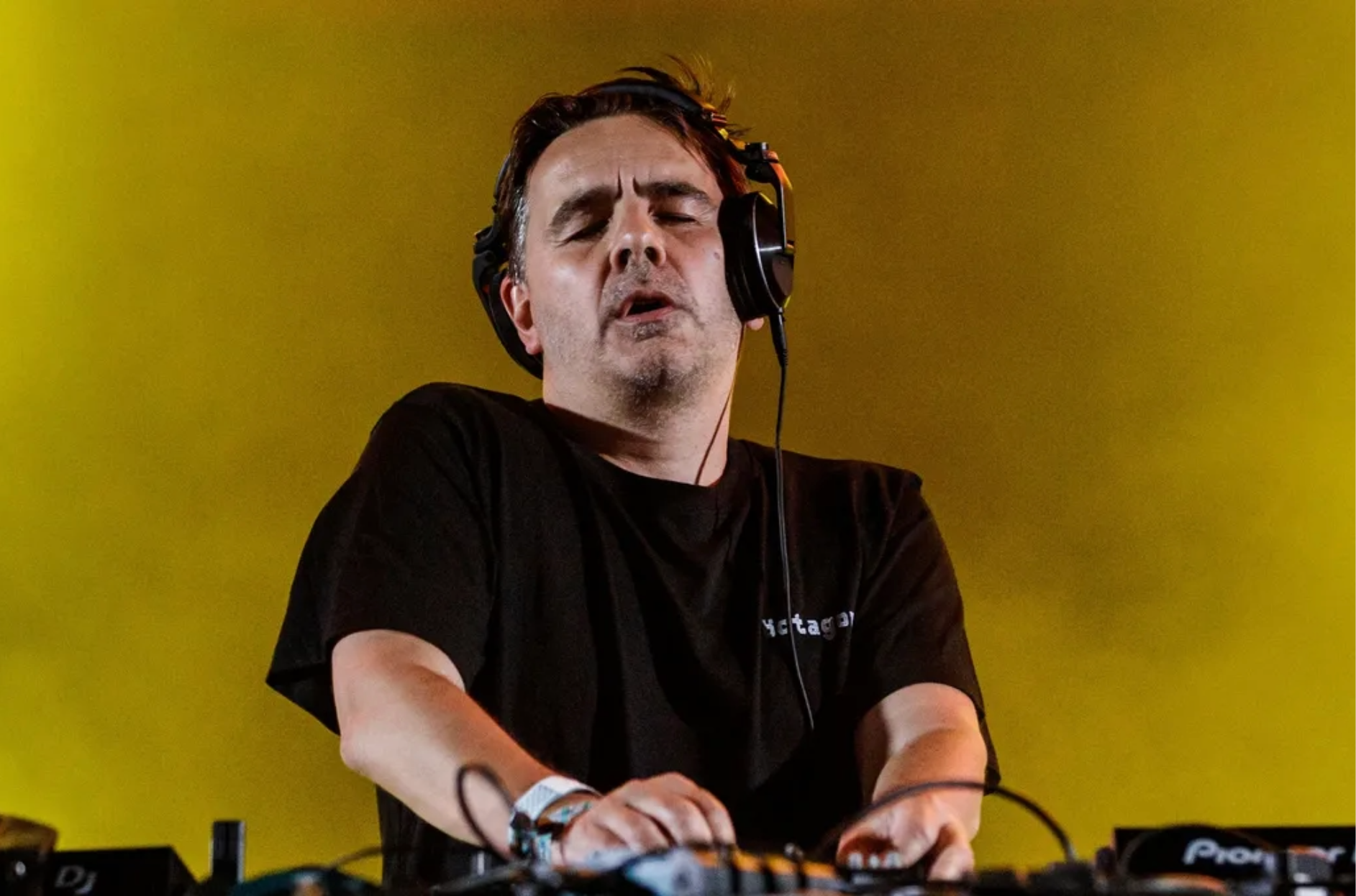
Laurent Garnier (Billboard France)
They’re recognizing opportunities and identifying moments where one piece of music can temporarily merge with another.
They’re creating new relationships between songs.
In many ways, they’re improvising with the building blocks provided by producers. I remember exchanging with a Berlin DJ who told me she saw each of her records as “friends,” with some being a perfect match for one another.
The Secret Behind Seamless DJ Transitions
Many people assume that smooth mixing is mainly a technical skill. Technical skills matter, but they are only part of the equation.
What makes a transition feel seamless is usually the design of the tracks themselves. Most successful transitions rely on a few important factors. While some DJs wonder how to make electronic music flow, an experienced one will know through their past sets that it all comes to transitions.
Space
A DJ needs room to work. When two tracks are being blended together, there must be enough space in each arrangement for overlap to occur. If both tracks are completely full of melodies, vocals, effects, fills, and dramatic changes, the result often becomes chaotic.
Tracks that are easier to mix usually contain sections where the arrangement is intentionally less dense. These moments create opportunities for layering. It’s the space you create between moments that lets the DJs juggle between tracks. But knowing where a loop begins and ends will also be important.
Temporary Third Tracks
One of my favourite things about DJing is that two tracks can temporarily become a completely new track.
For a brief moment, elements from both songs coexist:
- the kick from one track
- the bassline from another
- a pad from one song
- percussion from another
This temporary combination creates something unique that may never exist again. In many ways, this is where the art of DJing truly lives. The audience isn’t simply hearing two tracks. They’re hearing a momentary composition created from both. This means you can understand that I’m a big fan of fast mixing, cuts, and abrupt transitions. They won’t provide the hypnotic impression that slow mixing has on my brain.
Predictable Structure
Tracks designed with DJs in mind generally contain introductions and endings that facilitate mixing.
An intro usually provides:
- clear percussion
- obvious rhythmic information
- limited harmonic content
- enough time for another track to be introduced
Likewise, the outro often gradually removes melodic information, creating space for whatever comes next.
Both sections act as bridges. Without them, transitions become significantly more difficult.
Why Intros and Outros Matter
One thing I frequently notice is that producers underestimate the importance of intros and outros. Many artists focus exclusively on the “main idea” of a song. Or they’ll make intros that aren’t easily mixable for the DJ.
The problem is that DJs often spend significant time working around the edges of that idea. A useful intro should communicate the essential information of a track without overwhelming the mix. The root key should be understandable, while the rhythm should be obvious. That is what makes an intro DJ-friendly, compared to one made to begin a set.
A good intro can determine how electronic music flows for the rest of a set.
The arrangement should leave room for overlap. Traditionally, DJs appreciated intros and outros that lasted close to two minutes.
If a track contains:
- a two-minute intro
- a three-to-four-minute body
- a two-minute outro
The resulting track length naturally lands around six to eight minutes. It can be shorter as people working with digital players can easily loop parts. But if the track is on vinyl and lasts that long, you can squeeze in a good 4 tracks. A vinyl can properly manage 16-18 minutes per side.
It’s a format that evolved because it provides enough material for both listening and mixing. Today, digital DJ tools allow us to shorten these sections using loops and cue points.
Even so, the underlying principle remains unchanged.
DJs still need room to work. The more space there is, the more options one will have.
Read my thoughts on how to finish a track
Transitions Are More Important Than Most Producers Realize
Another characteristic of flowy music is the presence of clear transitions. While the DJs make transitions between songs, a producer is responsible for creating transitions between sections. They act like punctuation in language.
Without punctuation, reading becomes exhausting. Without transitions, listening can become confusing, except when you know how to make electronic music flow; then music can be without transitions as a whole song flows gradually.
Good transitions help define sections and help listeners understand where they are in the song. They also help DJs predict what’s about to happen.
Therefore, some examples include:
- removing the kick before a drop
- introducing a riser
- opening a filter
- reducing the arrangement density
- introducing a fill
- creating a brief pause
These signals help both the audience and the DJ navigate the music. When transitions are clear, tracks become easier to combine.
As a result, entire sets begin to feel more coherent. You know the production’s transitions are well elaborated when people on the dance floor know in advance when the drop will hit them. Predictability has its benefits.
The Hidden Language of Genre
This brings us back to the idea of codes. Every genre contains signals that communicate information. Think of them as a language.
A simple example would be muting the kick drum for two beats. Within many styles of electronic music, this immediately suggests that something is about to change. Or, a riser often suggests a new section, while a snare roll usually indicates incoming energy.
A filtered breakdown signals a temporary reduction in intensity.
These production choices aren’t random; they’re implicit communication tools.
They’re telling the listener:
“Pay attention. Something new is about to happen.”
DJs understand these signals instinctively because they’ve spent thousands of hours listening to music. The more familiar a DJ is with a genre, the more easily they can predict the structure of a track.
Sound Design Also Contains Codes
The language of electronic music isn’t limited to arrangement. It also exists within sound design.
For example, when people think about dub techno, certain sounds immediately come to mind:
- minor chord stabs
- filtered delays
- soft saturation
- spacious reverbs
- simple rhythmic repetition
Those sounds communicate a specific identity and mood, and sometimes refer to the original artists who founded the genre. House music has its own vocabulary, and subgenres define the energy or intent a song conveys.
Drum and Bass takes a different approach, but there are overlapping spaces where it has bred with dub techno, creating new subgenres. This is also where it can be exciting for DJs, because when two genres come together, it gives them room to navigate between the 2.
Trap also has its own way, which could be a not-so-distant cousin of hip hop. The same applies to electro, ambient, minimal techno, and countless other styles.
Using these conventions doesn’t mean you’re being unoriginal. It simply means you’re speaking a language that listeners already understand. As a producer, you have to choose a technical approach when making a song: either innovate or copy/blend within a genre. The cross point of both also works. Those are simple decisions that can affect how electronic music flows.
Innovation becomes easier when people understand the context from which you’re departing.
Breaking The Rules
Of course, none of this means you must follow genre conventions. Many great artists deliberately break them. Sometimes the most exciting music emerges when someone ignores expectations entirely. However, it helps to understand what you’re breaking.
If you decide to completely reinvent a genre’s sound design, maintaining some arrangement conventions can provide stability. Likewise, if you radically change the arrangement, keeping familiar sounds may help listeners stay connected. Think of it as maintaining a bridge between innovation and comprehension.
The goal isn’t necessarily conformity but instead, communication.
Characteristics of Music That Flows
When I analyze tracks that feel particularly smooth and coherent, several common characteristics often appear. Let’s point out the ones that are
A Clear Rhythmic Foundation
The groove feels intentional. The listener always understands where the pulse is.
Don’t confuse simplicity for clarity.
Harmonic Consistency
The root key and scale remain understandable. This helps DJs blend tracks while keeping listeners oriented.
Controlled Dynamics
Not every moment needs to be exciting. In fact, excessive excitement can reduce impact. A track filled with constant crashes, risers, and dramatic moments becomes difficult to mix and often exhausting to hear.
Contrast creates movement. Also, emotion shifts. Moments of calm allow energetic moments to feel meaningful. To appreciate the energy of a section, you have to temporarily remove elements that frustrate the listener.
Repetition
Electronic music relies heavily on repetition. Rather than viewing repetition as a weakness, it’s useful to see it as a stabilizing force.
Recurring motifs create familiarity. Familiarity creates flow.
The first minute of a song, where one inserts moments of sounds, announces the structure of the rest of the song. It is common that you have the same sound distribution across the entire song, and the first minute is simply signalling how the rest will unfold.
In microprogramming, a loop involves repetition, but a song is also a series of patterns that recur at specific moments.
Clear Structure
When sections are easy to identify, listeners remain engaged, and DJs gain additional opportunities for creative mixing. As explained in the previous point, clarity helps the listener situate themselves.
Flow In Production Mirrors Flow In DJing
The discussion about flow doesn’t end with arrangements. There’s also the question of workflow. Many producers want their music to feel fluid, but they work in ways that constantly interrupt momentum.
Creating flowy music often requires a flowy creative process. This brings us to the psychological concept of flow state. Flow occurs when we’re working on something that is challenging enough to remain engaging but not so difficult that it becomes overwhelming.
For producers, this often means beginning with tasks that feel accessible:
Start with something you know how to do.
Start with something enjoyable.
Build momentum first.
Challenge yourself later.
Many musicians make the mistake of opening the studio and immediately attempting the hardest possible task. That often creates frustration instead of momentum.
Why Beginners Struggle
For beginners, nearly every task can feel difficult. Sound design feels difficult. Arrangement feels difficult. Mixing feels difficult.
Decision-making feels difficult.
This is why I often encourage people to embrace limitations. Rather than trying to master everything simultaneously, focus on what you can already do. Build confidence through repetition. Develop familiarity. Once those foundations exist, more advanced techniques become significantly easier to learn.
Instead of saying “I wish I could master this technique”, try saying “This song is about what I know at the moment; it reflects where I stand in time.”
One Of My Favourite Exercises
One exercise I frequently recommend is incredibly simple.
Take three or four loops.
Nothing more.
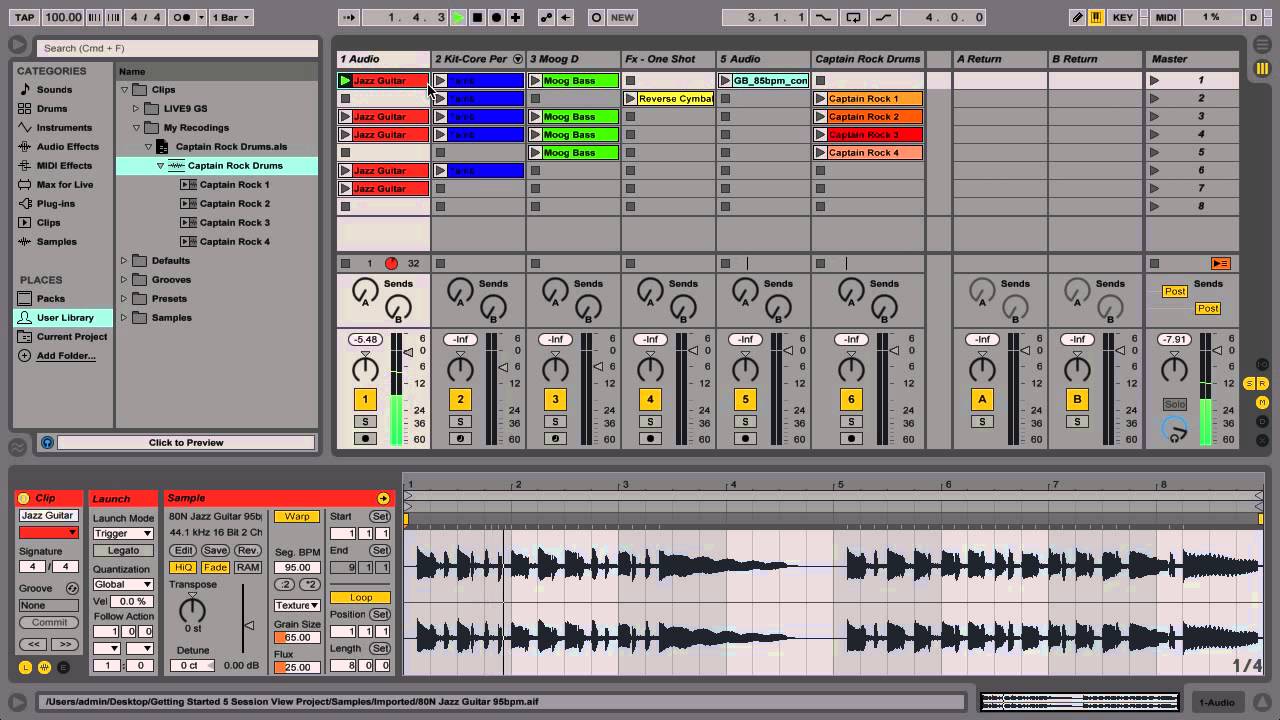
Then begin exploring every possible combination. With Ableton’s new Extension feature, we will soon have plenty of new tools to slice and play with imported loops.
Try:
- rearranging them
- slicing them
- muting sections
- changing their order
- creating variations
Almost anyone can do this.
Yet surprisingly complex results often emerge. Many producers underestimate how much music can be created from a limited amount of material. Complexity is often hidden inside simplicity.
As strange as this sounds, it’s easier to make complex ideas than simpler ones. Complex ideas are often unclear and difficult to connect with while simple ones are accessible to most people.
Losing The Plot
One of the biggest threats to flow is losing sight of the original objective. This can happen in several ways.
For example:
- becoming obsessed with details
- forgetting the big picture
- chasing every new idea
- abandoning the original plan
A member of my Patreon community recently described a common situation. They were studying a reference track. While analyzing it, they discovered a new idea. The discovery was exciting enough that they immediately abandoned the reference and began exploring the new direction. There’s nothing wrong with curiosity.
However, constantly switching objectives creates friction. My preferred approach is simple.
Save the new idea. Document it. Then continue working on the original task.
Bring the reference project as far as possible. Once that work is complete, return to the newly discovered idea. This creates continuity while preserving exploration.
You don’t lose the discovery, but you don’t lose momentum either.
Limitations Create Identity
I’d like to conclude with something I’ve learned repeatedly throughout my career. Limitations are not obstacles. They’re often sources of focus. Many producers spend years chasing things they can’t do. They become frustrated because they compare themselves to artists with different skills, tools, experiences, and interests.
Meanwhile, they’re overlooking the things that already make them unique. Some of my favourite musical discoveries emerged from situations where I lacked knowledge, equipment, or technical ability.
In the 1990s, I had no real understanding of what I was doing. I wasn’t trying to execute a master plan andwasn’t trying to satisfy a genre formula. I simply captured whatever emerged from the studio and worked with it.
Looking back, many of those limitations became part of my artistic identity. The same principle still applies today. Music flows when it remains connected to its own internal logic.
DJs create flow by understanding the language hidden inside tracks. Producers create flow by understanding the language hidden inside genres. Artists create flow by understanding the language hidden inside themselves.
The more clearly those languages communicate, the more effortless the music will feel.
Recommended sets:





 intuition in music | Audioservices.studio
Leave a Reply
Want to join the discussion?Feel free to contribute!