In Conversations with Clients, we bring you an honest and unfiltered look at Pheek’s services, straight from the mouths of those who know — and want you to know too! For this second piece in our series, I spoke with Luis Rivera (artist name LRb), a minimal techno producer based in Puebla, Mexico.
♦ ♦ ♦
Hi Luis, thanks for taking the time to chat with us! To start off, why don’t you tell us how long you’ve been producing music for?
Well electronic music I’ve been producing in Ableton for 5 years now, but I started making songs with my sister when I was very young. I played the guitar and my sister sang and we used to record it on an old tape recorder my dad has. So I’ve been making songs and music all my life, but producing electronic music for 5 years.
Now tell me a bit about your projects. Do you have any releases yet or are you working on that?
No, actually I’m working with Pheek because we want to release an EP. That’s the idea behind me using his services, the song finalization and analog mastering services. There’s an app, a KORG app, and I started making songs with it, and I won a contest they had 4 years ago, which led to a release on a compilation of tracks. But I’m working right now on my first EP.
When did you realize that you wanted help with your EP?
Well the thing is, if you start making one kind of music, in my case it’s techno minimal, you tend to repeat the same things. Like in your workflow, you always start, in my case, with drum groove, and even with the drum groove, you always start with a perfect kick, then some hi-hats, then some claps, and you start doing things methodically. You can hear your tracks, and you think they’re all different, but if you leave them for 2 or 3 days and you hear them again, you’re like, “This sounds exactly the same as the track I made a month ago.” So to try to do things differently, you need help, somebody from the outside, an educated ear. I realized that I had 10 tracks that were pretty good for me, I had stuff that I really liked, but – I didn’t know if it needed polishing or what – but I didn’t want to leave the songs as they were. I thought I could improve them. So that was the point where I knew I needed help, but you need help that is very specialized in this type of music.
How long have you been working on the tracks that you’ll be releasing?
There are tracks that I’ve made in the past 2 to 3 years. When I started talking with Pheek, he suggested one thing. He told me, “You know, you should get those tracks out of the closet and listen to them again, with all the knowledge you have right now, with everything you’ve learned through the years, you’re gonna listen to them differently. Maybe you can combine your current drums or groove with a bass you really like from a song you did 3 years ago.” So I did exactly that, I spent 2 to 3 weeks listening to tracks I remember I liked – you don’t remember anything though, you don’t even remember making the track!
We’re looking right now at 8 tracks – the idea is to release 4 – but 80% of these are tracks that I did 3 years ago, and we’re reinventing and smashing things up, et cetera.

How did you find out about Pheek’s services?
I am really a fan of his music. I had an album that was released by Minus and I really liked the tracks. Actually, they were very inspiring for me at the beginning of my work in electronic music, because I was more oriented towards dubstep and drum ‘n’ bass, and then eventually I started listening to house and techno music – I mean, I loved techno from when I was very little – but there was a track from Pheek on the record, and I started following him on Soundcloud and Facebook. I saw that he posted about his services, so I checked them out on his website, and I just sent him an email. It was super fast and easy. So it was very easy for me to establish contact with him.
Had you ever heard of song finalization services before or was this something new to you?
No, it was something completely new for me. And it was very attractive, but also very scary for me at the beginning. It was very attractive, because I thought I have an opportunity to have an artist, a real artist, whose music I really like, in the same genre I produce – and he has so many years of experience, et cetera, et cetera – so I thought it would be very, very productive for me to have someone like him hear my songs. But at the same time I was very scared, because I still want the songs to be my songs. I don’t want them to be completely changed or anything like that.
And what led you to decide in the end to book him?
Well you know, I simply said “okay, let’s try it.” I talked to Pheek two times before I sent him tracks. We were very clear on the idea I had for the EP, we talked about the general idea, the theme behind the EP. And then I just sent him the track, and he works very fast. Two or three days after he sent me his version, his arrangements, and I immediately loved them.
So it has been a very productive and very easy working relationship. I like to say to him – he laughs, but I like to tell him, “I’m not your client, I’m your friend, and let’s do this like we’re friends.” And it has been flow, flow, flow from there.
What was the thing that struck you the most about working with Pheek, was there anything that surprised you?
Well first of all, he’s always available. You would imagine that a person with his record label, with his mastering work – he does a lot of mastering for a lot of producers – you’re gonna think, “well he has a very busy agenda.” But he’s always available. That was the first thing that really connected with me, that I know I can ask him for advice on many other subjects, not just, “Okay, what arrangement did you do on this or that track?” I can ask him, “What are you listening to right now?” and stuff like that.
And second, definitely the arrangements, the things he sends back to me, they’re things you can only do with experience, with all those years you have working in the studio, mastering, hearing music. All those little things, in the end, they make a huge difference on your tracks. Like for example, I had a song that was driven with very dark synths, it has a very heavy bass, but I didn’t know where to put the percussions. I sent it to him, and 3 days later he sent me a song with just a ride on the percussion, just a cymbal, and it was amazing. He did 2 or 3 things there that were amazing, that completely changed the vibe of the song, and I really liked it. You know, those kinds of things, only a person with experience can really give you.
So in the longer term, what do you think you’ve gained from this experience of working with Pheek? What has it brought to your music production in a lasting way?
Oh a lot of stuff, it’s definitely a lot. Well actually, first, I hope I can continue working with him. He’s very active in other things too. Like right now we’re preparing the EP – we have some labels in mind – but the idea is to make this kind of big. He offers you help in that aspect too. So first of all I don’t wan’t this to be a one-time experience, I am definitely going to continue working with him. The mastering he does – his studio is filled with analog stuff, I produce mainly with analog instruments, and the sound is amazing when he sends back the songs.
But you know, those little pieces of advice, the way he sees things musically speaking, you learn a lot, you learn very very much, in very short conversations, and you can soak up all the knowledge he gives you. It’s like a graduate course!
Check out Luis Rivera (LRb) on Soundcloud here.
—
This interview has been edited.

Resistances and Procrastination
/in Blog, Production/by pheekI like to believe that creating music goes beyond simple clicking and assembling. The whole process of making music has always had, to me, a very deep feeling of inner exploration. It’s the same when it comes to listening. Apparently, music has this effect on about 60% of the population, so not everyone gets the same chills from listening to music. But if you do get a sensation like this, then you’ll try hard to get more of it.
Now, when it comes to making music, that honeymoon phase after you first discover how to make your own sounds can be an exciting moment. But for so many, soon after, a sense of frustration begins to set in. It can come from:
The next thing you know, you’ll start procrastinating. You’ll feel like there’s some sort of inner balance to achieve each time you’re about to make music. As David Lynch points out in the clip below, a lot of artists think that suffering is a necessary part of creativity, when in fact any kind of suffering just cramps up the creative flow. In my view, this is not a healthy approach to getting new ideas.
So how do you avoid suffering?
That’s obviously a very difficult philosophical question to answer, though it’s clear that relying on substances is not the way to go. They might do some good in the short term, but you don’t want to develop that as a habit. To me, the essential question to ask is existential: why are you making music in the first place?
If the first answer that comes to your head is anything more than simply enjoying yourself, then you’re setting yourself up to feel resistances. When I say “resistances,” I mean those frustrations or blockages you might experience once you sit down and try to make music. You might feel like you’re wasting your time, or be tempted to just stop and play video games instead. You might conjure any range of excuses to plunge into procrastination.
The solution to this is to build up your appetite for music-making.
Here are some tips for doing this:
I hope this helps!
SEE ALSO : The Rule Of 10: Production in Rotation for Big Results
Buses vs Groups in Ableton Live
/in Blog, Mixing, Production, Tips/by pheekThe word “bus” may sound foreign to many beginner- and intermediate-level music producers who were not raised during the good old days of analog mixing on consoles. But rest assured, readers: the term “bus,” in this case, does not refer to a 33,000-pound vehicle, but to an audio channel that allows a multitude of audio signals to pass through it.
Buses are used to apply general processing to the mixed signal, so as to achieve a more cohesive effect over a particular range of instruments. This may sound daunting, but allow me to provide an example to clarify. If you have several drum channels (kick, snare, hats, toms, etc.) playing in the DAW that you are using, it would be wise to send and route them to a drum bus, onto which you could then apply some warmth or glue with mix bus compression.
There are several DAWs, including Bitwig and Ableton Live, that allow you to “group” tracks together. Other DAWs prefer to emulate traditional mixing consoles by routing the desired channels through a bus. Note that neither method is better than the other: they are exactly the same. Nevertheless, Ableton aficionados may want to begin using buses more often, given that their use simply opens up more possibilities in terms of mixing the music created.
How so? There are certain techniques that just aren’t available to you when you’re “grouping tracks,” such as sending a parallel compression return track to a group, or applying effects to two groups at once by grouping them together (groupception). But by using buses, you’ll be able to route any audio signal to any channel you wish.
So with all this being said, here are some pointers for creating your first buses.
Basic I/O Routing
If you have groups of elements that share similar sonic features and would like to EQ or compress them all together, then you can create a bus and send them through it:
When I’m mixing, I’ll even go as far as creating individual buses for every group of tracks towards the end. This helps me get the levels right and apply broader strokes for every category of sound (bass, drums, etc.)
To conclude, I’d just like to emphasize that there is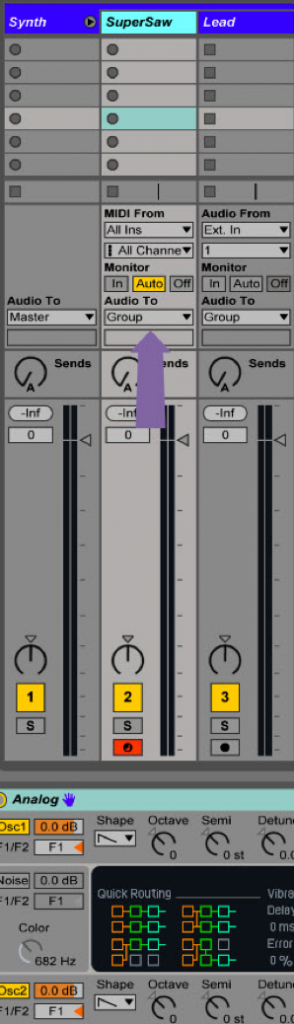 absolutely nothing wrong with using groups when mixing. It’s simply that they should be used more often to organize your channels while you’re writing music, composing, doing sound design, etc. to work faster and more efficiently.
Remember, you can always group channels together by pressing CTRL+G or CMD+G on Mac! The audio channel will be automatically routed through the group fader and will function exactly the same way as a bus does.
SEE ALSO : Reverb Tips to Boost Your Creativity
Getting signed to a label
/in Blog, Production, Tips/by pheekOne of the things I notice most from the artists I hang out with is how obsessed they can be about getting signed to a label.
You probably already know how to send in a demo, but do you know how to pick a label? Just like when picking a reference track, you need to find all possible references of the label you want to work with. You need to do your homework.
Don’t get me wrong. Even when I make a new track, there’s always that little voice at the back of my head saying, “Oh, this might fit this or that label.” And if I’ve been contacted recently, then I might already have a lead, which makes it easier. Admittedly, at my stage I have a lot of contacts and receive a lot requests, plus I run my own record label, so the question of where to publish my music isn’t as much of an issue. But still, sometimes it is.
If your approach isn’t succeeding in getting you signed, it could be that you’re poorly targeting the labels you’re submitting to. In other words, labels don’t always sign artists for their music only.
Does your approach match how they think? Getting to an A&R (the “artists and repertoire” division of labels) is not easy. You need to find who picks the label’s music so you can submit your music to them. Forget writing to random email addresses or messaging Soundcloud profiles. Trust me, it doesn’t work this way. Instead, try reaching out to an artist who’s already on board to find the right contact. If you can meet them in person, it’s always the best thing to do.
Do you share the same networks? Are you friends with artists on the label? Are you following the same artists on Soundcloud? Is the A&R friends with some of your friends on Facebook? Being socially close to them can really help.
Does your profile answer a need? This one is crucial. Each label has its own ways of doing things and is carefully building up its catalogue just like a DJ prepares their set for a gig. If you’re a DJ, you know that you want certain tracks in your set. You’re avidly searching for a specific sound or rhythm, or a particular song structure, mood, or tone. A label owner has musical needs too. They usually follow trends partly, but they also flow from past influences. It helps to refer to the label’s past releases, but it’s even better if you’re up on what they’re into now. This can be a game-changer.
FINDING YOUR LABEL MATCH
Well, first let’s examine a little scenario to give us some context. Let’s say you finished a track based on a reference track by X artist. That reference track is your biggest lead for whom to send it to. But if you’re not yet well known or have very few releases to your name, then sending it to the best or biggest label out there — even if your reference track is released with them — is a very bad idea. Not only are huge labels swamped with demo submissions, but they’re also super picky. The fact is that your reference track likely had to follow a winding road to get that label. So let’s investigate.
FOLLOWING THE TRAIL OF REFERENCES
Finding your label match takes time, patience, and lots of research. Here are a few cues of where to start.
Soundcloud. The holy grail of every possible kind of music, from unreleased to released, and featuring every possible label out there. Have a close look at your potential labels, and check out who they follow and who follows them. Dig, dig, and keep on digging. Give attention to who leaves comments. Those guys can be really useful because they might like various labels/artists you’re investigating.
DJ sets. Listen to DJ sets to find who plays music like yours. Get the track lists to find out what they play, find what other tracks DJs like to mix those with, and then investigate the artists similar to you and see what labels they’re on. Mixcloud also provides tracklists for DJ sets.
Charts. Once you have a track list, go on Beatport to find charts and recommendations. You can find a bunch of labels there, so check out their back catalogues and investigate some more.
Discogs. Browse the discographies and look at past releases. When you select one, Discogs will offer you album suggestions, which in turn can point you to more labels. You can really dig deep that way.
Conclusion
Think away, do your homework, and plan carefully before submitting your demos. Our label gets so many demos that we can allow ourselves to be very picky, and it’s the same for many of them out there. It’s about much more than presentation at this point — it’s about being spot on with who you target, and then selling yourself with a push from someone they know and respect. You’ll have a much harder time if you try to go it alone.
SEE ALSO : Besides music, labels are searching for these traits
Dealing with Past Mistakes
/in Blog, Production, Tips/by pheekI was chatting with a producer friend of mine recently, and he mentioned that he was currently contacting some record labels he had released with in the past to ask them to remove his music from digital stores. I didn’t get why he would ask for such a thing, but he explained that he felt embarrassed by his past tracks and that he didn’t want them to represent him anymore.
He said he feels that most of the music he made back then was directionless and tailored for specific labels, and that it has nothing to do with the artist he is now. So the big question is: do I live with the past, or do I try to erase the music that I don’t want to be associated with anymore?
Well, let’s try to unpack what happened in order to avoid falling into the same trap. What were the main factors that caused my friend to react towards his past in this way?
Lack of music testers. Have you played your music for people who you know are reliable sources of criticism? This might sound obvious, but a lot of producers will just finish a track and send it off to a label right away. This is a very bad habit to develop, because a second pair of ears might be the best tool out there for gaining a fresh perspective on potential issues with your tracks.
You might think you can disown the problem by relying on the label owner to take care of the technical aspects, but the truth is that a lot of label owners aren’t always technically savvy. This is how my friend and I were wondering, “How did the label owner let that get past them without sending it back to have those issues fixed?” Mainly because it’s up to the artist to ensure their track is solid enough for them to be proud of — and for it to pass muster with reliable critics too.
If you’re spending most of your time trying to sound like others, you’ll be trailing behind all the time, trying to adjust yourself to their sound even after they’ve moved on. This is not an issue if you’re sounding like yourself.
This is a difficult question to answer. If listeners can recognize your sound from one song to another, there’s a good chance that you’ve found it. And if you tend to return instinctively to a particular musical direction when you’re having fun in the studio, this can also be a strong indication of your voice.
Try these tips to find your own voice:
In conclusion, I’d really encourage you not to remove music you made in the past. It is you, and old productions can be very useful for keeping track of how much you have evolved. Besides, some people might have loved what you made, and keeping the music out there is a good way to reach appropriate people.
Should I Remix for Free?
/in Blog, Tips/by pheekIf you’ve been hanging out on SoundCloud, uploading some of your music productions, commenting on other artists’ tracks, and exchanging a few words here and there, you may have been invited to collaborate at some point. If you haven’t invested much time in networking on SoundCloud, you’re really missing out on one of the most important hubs for music producers.
There’s been a huge emphasis in recent years placed on the number of followers producers can rack up. I even get people hitting me up every now and again to offer me 10,000 new followers, if I pay them 100$ or so.
Record labels won’t bite if they see an empty profile with two songs, but 1000 followers. And it’s not only labels who’ll see right through this. Anyone who’s even slightly curious or discerning will be struck by the awkwardness of such a hollow presentation.
Genuine connections, however, can go a long way. The more you interact with people directly (through SoundCloud’s horrible messaging system…), the more you run the chance of being invited to do a podcast or a remix. It’s even a pretty frequent occurence for active users.
It comes down to these key points:
So as a producer, if you’re facing the option of being invited to work for free, consider these 3 things:
Ask yourself these questions, and feel free to ask the people who are inviting you to collaborate. If you’re going to do it for free or for a few bucks, it’d better be a fun gig!
Now just one final tip: you too may at one point invite someone to remix your music, and they might be considering these same points. So if you really want to work with an artist you love, it could be worthwhile to invest some money into having that special artist remix your track. Paid artists are often a good source of promotion to get your music where you want it to be.
Deconstructing A Reference Track
/in Blog, Production, Tips/by pheekNote: This article is partly related to the Non-Linear Music Production technique explained in my previous post. It offers a complementary method for finding inspiration in your workflow.
Now that you’ve been exposed to my non-linear approach to music production, you know that the early stages of production are focused on building ideas and content. Once that has been attacked, you can start looking into creating a temporary structure for a loop. If you’ve also checked out my One Loop Per Day challenge on YouTube, then you’ll see that the following step is to build a storyline around the idea.
One of the best and fastest ways is to devote your time to carefully analyzing the work of artists you admire. This entails actively analyzing and interpreting others’ work within your DAW so as to carve out a path that you can easily implement in your own production.
But before you dive into your sources of influence and follow the process outlined below, I’d like you to consider this famous quote:
Step 1: Finding Your Track
Step 2: Correcting Grid Settings
Step 3: Placing Markers and Locators
Step 4: Analyzing
Now for the important part…
Step 5: Taking Notes
Once you map the structure of the track with locators, it’s important to take note of all the musical elements that come into play for each section. This is how you’ll get to understand what to place and when within the sections of your own track.
Bonus Tip: Creating Ghost MIDI Clips
The last trick I want to show you for deconstructing your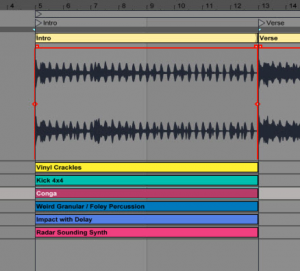 reference tracks element by element is to create ghost MIDI clips for every instrument. This is the best way to learn from other people’s tracks, because it will allow you to break them down layer by layer.
Using this method, you can even go as far as deleting your chosen reference track and just filling in the MIDI skeleton with your own synths, pads, drums, effects and more! You’ll have the same arrangements as the artist you chose to mimic, but it will be your sound!
SEE ALSO : Where to Get Fresh New Ideas for Tracks
Non-Linear Music Production
/in Blog, Tips/by pheekBut starting new projects is and should be fun. That’s why I’ve even been encouraging people I coach to try to start one project a day.
I swear, it will even become addictive.
So you might be wondering: how does this help you finish tracks if you just keep starting new ones?
Have a look at my Discogs page and you’ll see that I’ve released many EPs and albums. This is the technique that I’ve been using, which I call Non-linear Music Production (NLMP). And I can honestly say that I couldn’t have done it any other way.
The main mistake many producers make is to tackle a project from start to finish in a single sequence. This is how they operate:
By comparison, Non-linear music production, or NLMP, works very differently. But after introducing it to people, I started seeing them improve.
The first thing that’s different is the introduction of what I call “rounds.“ A round is an iteration of the same work process. But to define your round, first you need to decide how many tracks you need in your project. Usually, an EP will be 4 tracks and an album, 8 to 10. The number of tracks will decide the number of rounds.
Let me explain.
Once you have decided on the number of tracks, here’s how to work rounds:
Now, you will repeat this for each track on your EP or album, and each of them will evolve in parallel instead of one after the next. It will give you the impression that you’re not going fast enough, but you are actually farming your tracks all at once. Once you have your X number of tracks, all with an idea/hook, then you can move to the next stage of rounds.
Again, try to not spend too much time at once on each project. Plus you should try to space out each of your sessions by at least 24 hours. Rested ears know better. Then the final stage will follow:
As you can see, whenever you start a new round, you then repeat it for all of the other tracks. This goes as well for the mixing and such. You can develop your own workflow too, but in the end, what matters is that each track evolves in parallel.
What’s really exciting about this technique is when you get to the last week and finish all the tracks. You’ll see the end results all together, then you’ll just have some final touches to make, and boom, your project is done.
I’m currently working on a document that describes the whole process in detail. If you subscribe to my free coaching service, you’ll get the training and more news as it comes.
SEE ALSO: Making and breaking genres in your music
When Do You Know A Track Is Finished?
/in Blog, Production, Tips/by pheekAre you one of those perfectionists that has a hard time finishing a project because they feel there’s always one more detail that needs fixing? I’ve published a few posts with tips on how to finish tracks, but maybe you’re still spending countless hours on minor tweaks. You’re not alone. I’ve long been like that too, but with time I’ve learned to find a happy balance between embracing my perfectionist side and staying spontaneous.
For all you know, people might love the exact things you were trying to suppress.
Here’s where it can become a problem:
You’ve been adjusting (and readjusting) the same project for months. Each time you listen to your track, you hear some new detail that you’d forgotten about or hadn’t noticed before.
This might be because:
You’re spending too much time on your track in one sitting. If you spend 4 hours in a row on a track, you’ll lose the perspective you need to hear things properly. I’ve stressed this before, but I always recommend taking tons of breaks, and to space out your sessions too. Letting your project sit for a few days before opening it again can really help. A week is even better. Months can do magic.
Your listening environment might not be perfect. This is why listening outside can help you figure out what needs tweaking. Try to always refer back to tracks that you know sound right, and insert your track into the same playlist. You can then put your player on shuffle to discover if your track sounds like it fits in.
But remember: achieving perfection is an illusion. What you hear on the 1000th listen is only what someone who has been listening to a track on non-stop repeat will hear. The chances are very low that anyone on earth will listen to your track as much as you do. And even if they did, by that point there’s actually a mental mechanism that kicks in, where people’s brains will adapt their perceptions to the track so as to accept it as it is. This might be a bit hard to swallow at first, but it is factual.
Which is all to say that spending countless hours on that snare just might be a bit overkill.
In conclusion, you never really know if your track will be done. It is just a matter of accepting to move on and leave that track living it’s own, watching where it will end and accomplish. Go focus on the next work. You can always leave a track sleeping for a few months and get back to it later. That is always a way to see what’s left to be done.
SEE MORE: What Is A Mature Sounding Track?
Where to Get Fresh New Ideas for Tracks
/in Blog, Production, Tips/by pheekFor many, just the pressure of trying to come up with new ideas can generate a writer’s block. And asking someone like me for tips on where to start could also lead to more questions, since I’ve developed my own ways of approaching the process over the years. With that said, I’ve personally found it essential to bear these 3 things in mind:
While you might have an intellectual understanding of the whole process of making music, there’s another dimension, that of intuition and feelings. So this involves two things:
Everyone’s different, but if you think of bands for example, they jam together for a while until they uncover an idea they like. Then they will nail it down or record it to make it into a song. But before they can get there, they need to just let loose, go wild, and explore. In jazz, it’s well known that the masters would play for hours on end in little clubs, pushing themselves beyond the point of exhaustion until they reached a level of pure creativity, discovering new paths that they never would have found in a short session.
Basically, your brain needs a little push. You can’t just sit there and think you’ll have something fresh and innovative by opening your DAW and tweaking for 30 minutes. It demands patience, and giving yourself the permission to get a bit wild and break your own rules.
Many people find that jamming isn’t really their thing, and they’ll get great ideas if they already have material to work from. This is why sampling has become so popular in the last 30 years. Musicians take something they love, and then change the context to give it a whole new life. Using other people’s music can a bit of a legal nightmare though, so thankfully, as you know, there are tons of options out there — but maybe the best way is to learn to make your own sounds.
This is why learning to jam can be really useful. But how do you do it?
Try this simple exercise:
That’s it. You’re jamming. You have no idea how many people don’t realize how easy it is until they try it. And how fun. Just do it and PLAY your music.
On a final note, remember that inspiration also comes from listening to music, and lots of it — whether it’s music in the genre you want to make or something completely different, since you can translate ideas into your own world. One thing people sometimes forget is how listening to music with friends or in another context (walking, driving, commuting) can be especially useful, since it provides perspective on how the sound feels when doing daily activities. Ideas will then sprout.
SEE MORE: Recycling Your Tracks Into Fresh New Ideas
The Rule Of 10: Production in Rotation for Big Results
/in Blog, Production, Tips/by pheekI was speaking with a friend about my approach to making music, and I explained my rule of 10. Most people, especially new producers, will work a song until it’s done. But this is actually a huge mistake. The reason is simple:
Plus they fall into the trap of tweaking things endlessly for that one track.
You might already see how this can be quite limiting from a learning perspective. Or maybe you don’t agree. So let me throw a few ideas out there that could help you jumpstart your inspiration.
The same goes for your songs. Start multiple at a time, and while one is progressing, don’t hesitate to stop yourself and let it sleep for a week or two, especially when you’re entering a very productive phase. This is to make sure you’re always fresh when you open a project and know exactly what needs to be done next. You’ll observe that your perspective on your work will be more accurate. If you open your project and it’s a mess, leave it to rest some more, or maybe recycle it into another, ongoing project.
There are two approaches to the rule of 10:
10 different projects.
Create 10 folders, and drop an Ableton project that you want to develop into each. Also, take the time to insert reference tracks that you love. This is music that you’d like your project to sound like but not necessarily mimic. Don’t hesitate to drop anything in there — get some classical or jazz, record some field recordings, anything. No rules should limit you.
You should also do some careful sample hunting on a site like Splice, for instance. Drop various sounds in there you like, along with presets you want to use. Save some in there in a specific folder.
1 project, 10 songs.
This one might surprise you, but I love this trick.
This is also an excellent way to keep a particular mood from one song to another.
You will run into interesting results by having some sounds go through the effect chain from the previous song. You can also be creative and not use all the same hi-hats in the same channel. For example, one song could use channel 3 for claps, then the same channel for toms. Don’t alter the EQ and compression on the other tracks. Try instead to take advantage of the settings from the previous track to see how to tweak the following one.
For me, two things have always enabled new ideas: limitations, and being forced to work or think in a new way. Both go hand in hand. I know that most people feel like the more gear and gizmos they have, the more productive they’ll be. Yet getting more usually leads to procrastination, since you feel confident that you can do it in the end. I call that the runner’s syndrome: you bought your running shoes and shorts, so you feel you can run. But are you, really?
SEE MORE: Spending Long Hours in the Studio
Find a track tester for your productions
/in Blog, Production, Tips/by pheekThis might be one important post, so consider taking 5 minutes to go through it carefully. You probably already know how important it is to test the music you’re creating, but the big question is, how do you test your music effectively?
First, there are a few traps people fall into. I’ve said it many times, but succumbing to the myth that your music isn’t important if it isn’t signed to a label is a very common mistake — even for experienced producers. No joke. The truth is that your music is important simply because it’s yours. It deserves real love and attention, and that means proper treatment.
So how do you make sure to test your music properly?
In a word: you need beta-testers.
Track testers are experienced DJs who regularly play in all kinds of events, both big and small. The fact that someone plays often will ensure that your music gets inserted into their sets alongside other tracks, and that it will be heard by live crowds. The great news is that thanks to the internet, you can work with DJs across the globe and test its reception in different countries.
Here are a few tips on how to proceed:
Share music in private. If you’ve gotten into the game of sending music to labels only to have your experiences end in frustration, then working in a one-on-one setting can be much more interesting. Don’t just send a random link to a DJ though. Take the time to connect with the person first, and then share a track after you’ve made contact. It feels special to receive music privately after a nice introduction — and even more so if the music fits.
Get feedback and tweak. This part is a bit trickier. If you want the DJ to play your song in a club, you’ll need to let them download it first. Be sure your mixdown is right, and it’s even better if the track is mastered too. Once the track is played, try to follow up to get some feedback. Be clear that you’re not fishing for compliments, but that you’re genuinely seeking constructive criticism. This is the only way to improve your track.
And very importantly, make sure the person will not share the track with their DJ friends!
So sometimes, a smart strategy could be to sacrifice a great track you feel could get you attention, even if it means giving it away. If it works, then the benefit in the end could be much higher than the loss. I myself have done this multiple times with netlabels, and it often paid off.
SEE MORE: Guide to shameless self-promotion
Wisdom From Experienced Producers
/in Blog/by pheekSo you’ve decided to make music, bought the minimum to get going, and started to learn. But now you have this internal voice that keeps popping up, telling you that you’ll soon need to look for a label to get signed. No matter what you do, that little voice just keeps coming back. One of the reasons you welcome it and listen to it is because it opens the door to the dream of a release.
Well, not so fast. Before making music seriously or getting signed comes a very important step, which is to spend time with established producers. We admire artists who make music we love, and we want to meet them to see how they are in real life.
But above all, we can also learn a lot from them, no matter what stage of your career you’re at.
So how do you approach an artist?
Befriend them. Artists love company in general, but are sometimes socially awkward. Being warm and friendly to someone really is a good starting point. I’m saying this because sometimes people approach artists in the most bizarre way, as if trying to impress them or something.
It’s not to brag, but for me, being involved at MUTEK was a great example of this. Aside from performing, I also got to drive artists around as a volunteer, which is how I made some really remarkable encounters. Some of the discussions we had were so interesting and enriching that they had a lasting influence on my career. Like I explained before, meeting Richie Hawtin was a very positive experience for me, and we got to talk a lot about career choices. But one of the most influential people I met was without a doubt Ricardo Villalobos.
I’d like to share with you some of his thoughts that have stayed with me to this day. Often, I pass them on to others when I teach or coach.
“Music should be effortless.” As in, you should aim to achieve a state of flow while performing or producing.
“Be different, be personal, be bold and subtle, all at once.”
“Take the time to listen. To music, to people, to situations.” If you have ever seen him play in front of a crowd, it’s quite something to see him read it and control it.
So before dealing with labels, try getting involved in the community and meeting people you love. And whether it’s a Hawtin, a Villalobos, or just an experienced local you admire, you’ll find a good dose of inspiration, knowledge, and wisdom — and if you’re lucky, a new friend.
SEE ALSO: Creating Timeless Music
Conversations with Clients: Luis Rivera
/in Blog, Mastering, Production, Products, Song Finalizing and Arrangements/by pheekIn Conversations with Clients, we bring you an honest and unfiltered look at Pheek’s services, straight from the mouths of those who know — and want you to know too! For this second piece in our series, I spoke with Luis Rivera (artist name LRb), a minimal techno producer based in Puebla, Mexico.
♦ ♦ ♦
Hi Luis, thanks for taking the time to chat with us! To start off, why don’t you tell us how long you’ve been producing music for?
Well electronic music I’ve been producing in Ableton for 5 years now, but I started making songs with my sister when I was very young. I played the guitar and my sister sang and we used to record it on an old tape recorder my dad has. So I’ve been making songs and music all my life, but producing electronic music for 5 years.
Now tell me a bit about your projects. Do you have any releases yet or are you working on that?
No, actually I’m working with Pheek because we want to release an EP. That’s the idea behind me using his services, the song finalization and analog mastering services. There’s an app, a KORG app, and I started making songs with it, and I won a contest they had 4 years ago, which led to a release on a compilation of tracks. But I’m working right now on my first EP.
When did you realize that you wanted help with your EP?
Well the thing is, if you start making one kind of music, in my case it’s techno minimal, you tend to repeat the same things. Like in your workflow, you always start, in my case, with drum groove, and even with the drum groove, you always start with a perfect kick, then some hi-hats, then some claps, and you start doing things methodically. You can hear your tracks, and you think they’re all different, but if you leave them for 2 or 3 days and you hear them again, you’re like, “This sounds exactly the same as the track I made a month ago.” So to try to do things differently, you need help, somebody from the outside, an educated ear. I realized that I had 10 tracks that were pretty good for me, I had stuff that I really liked, but – I didn’t know if it needed polishing or what – but I didn’t want to leave the songs as they were. I thought I could improve them. So that was the point where I knew I needed help, but you need help that is very specialized in this type of music.
How long have you been working on the tracks that you’ll be releasing?
There are tracks that I’ve made in the past 2 to 3 years. When I started talking with Pheek, he suggested one thing. He told me, “You know, you should get those tracks out of the closet and listen to them again, with all the knowledge you have right now, with everything you’ve learned through the years, you’re gonna listen to them differently. Maybe you can combine your current drums or groove with a bass you really like from a song you did 3 years ago.” So I did exactly that, I spent 2 to 3 weeks listening to tracks I remember I liked – you don’t remember anything though, you don’t even remember making the track!
We’re looking right now at 8 tracks – the idea is to release 4 – but 80% of these are tracks that I did 3 years ago, and we’re reinventing and smashing things up, et cetera.
How did you find out about Pheek’s services?
I am really a fan of his music. I had an album that was released by Minus and I really liked the tracks. Actually, they were very inspiring for me at the beginning of my work in electronic music, because I was more oriented towards dubstep and drum ‘n’ bass, and then eventually I started listening to house and techno music – I mean, I loved techno from when I was very little – but there was a track from Pheek on the record, and I started following him on Soundcloud and Facebook. I saw that he posted about his services, so I checked them out on his website, and I just sent him an email. It was super fast and easy. So it was very easy for me to establish contact with him.
Had you ever heard of song finalization services before or was this something new to you?
No, it was something completely new for me. And it was very attractive, but also very scary for me at the beginning. It was very attractive, because I thought I have an opportunity to have an artist, a real artist, whose music I really like, in the same genre I produce – and he has so many years of experience, et cetera, et cetera – so I thought it would be very, very productive for me to have someone like him hear my songs. But at the same time I was very scared, because I still want the songs to be my songs. I don’t want them to be completely changed or anything like that.
And what led you to decide in the end to book him?
Well you know, I simply said “okay, let’s try it.” I talked to Pheek two times before I sent him tracks. We were very clear on the idea I had for the EP, we talked about the general idea, the theme behind the EP. And then I just sent him the track, and he works very fast. Two or three days after he sent me his version, his arrangements, and I immediately loved them.
So it has been a very productive and very easy working relationship. I like to say to him – he laughs, but I like to tell him, “I’m not your client, I’m your friend, and let’s do this like we’re friends.” And it has been flow, flow, flow from there.
What was the thing that struck you the most about working with Pheek, was there anything that surprised you?
Well first of all, he’s always available. You would imagine that a person with his record label, with his mastering work – he does a lot of mastering for a lot of producers – you’re gonna think, “well he has a very busy agenda.” But he’s always available. That was the first thing that really connected with me, that I know I can ask him for advice on many other subjects, not just, “Okay, what arrangement did you do on this or that track?” I can ask him, “What are you listening to right now?” and stuff like that.
And second, definitely the arrangements, the things he sends back to me, they’re things you can only do with experience, with all those years you have working in the studio, mastering, hearing music. All those little things, in the end, they make a huge difference on your tracks. Like for example, I had a song that was driven with very dark synths, it has a very heavy bass, but I didn’t know where to put the percussions. I sent it to him, and 3 days later he sent me a song with just a ride on the percussion, just a cymbal, and it was amazing. He did 2 or 3 things there that were amazing, that completely changed the vibe of the song, and I really liked it. You know, those kinds of things, only a person with experience can really give you.
So in the longer term, what do you think you’ve gained from this experience of working with Pheek? What has it brought to your music production in a lasting way?
Oh a lot of stuff, it’s definitely a lot. Well actually, first, I hope I can continue working with him. He’s very active in other things too. Like right now we’re preparing the EP – we have some labels in mind – but the idea is to make this kind of big. He offers you help in that aspect too. So first of all I don’t wan’t this to be a one-time experience, I am definitely going to continue working with him. The mastering he does – his studio is filled with analog stuff, I produce mainly with analog instruments, and the sound is amazing when he sends back the songs.
But you know, those little pieces of advice, the way he sees things musically speaking, you learn a lot, you learn very very much, in very short conversations, and you can soak up all the knowledge he gives you. It’s like a graduate course!
Check out Luis Rivera (LRb) on Soundcloud here.
—
This interview has been edited.
Learn Mixing At MUTEK’s Panel Workshop
/in Blog, Mixing, Production, Tips/by pheekI’ve been asked by MUTEK to present a workshop on how to prepare tracks for mastering. This means, in technical terms, how to get the most out of your mixdown session. For many people, the whole music production process seems like a crazy, disorganized back-and-forth of constant tweaking, with the help of a lot of coffee. But if you look at the most common modus operandi, the stages actually go like this:
Why?
One of the most important reasons is that if you juggle between these stages, you will lose focus. The mixdown will be done best if you have everything set up first. If you have to keep changing elements around as you go, you’ll be forced to reconsider EQ and volume levels also to make sure that everything fits. Think of it as building with Lego blocks: if you move one brick in the middle of a wall that’s already built, you’ll need to readjust a lot of things around it to compensate.
So while there’s no hard rule on the order of the stages, and one can hop between them to fix certain problems, there is another major issue to consider. If you spent countless hours on arrangements, your ears might be bored to death when it’s time to mix it, and you’ll lose what really matters. This is why mixing is increasingly seen as a stage you might want to leave to someone else — not because you can’t do it, but because you want a fresh perspective.
If you decide to do it yourself though, you want your song’s idea to be sewn up so that only the sound needs tweaking. And ideally, once you have everything set, you might want to take a few days off and then attack the mixing.
For the MUTEK panel, I’ll be sharing some great tips on:
I will be using some of the participants’ projects as an example.
You can register here.
Music Production And Studio Tips
/in Blog, Production, Tips/by pheekWhen I talk to music producers, both newcomers and more experienced ones, I realize that many of them could use some tips on improving their production workflow. I’m talking about the little things in life that aren’t necessarily computer related, but that can make a big difference in how effective you are with your studio time.
Most of these tips are based on the trials and many errors of my own experience, and on what I’ve learned by applying them every day.
Calibrate your ears. People really underestimate the importance of this one. It usually implies a fair degree of time spent setting your monitor’s volume at roughly 80 dB (there are smartphone apps that can measure this for you), then listening to music that you love and that you know sounds right. If you can listen for a minimum of 15 minutes, your ears will develop reference points of optimal sound levels.
Space out your sessions. I usually avoid making music (i.e., working on my own material) two days in a row. I space out my sessions by a few days and I try not to work on the same song more than once a week. This is why I’m always working on multiple projects in parallel. I’ll jump from one to the other, so that I’ll forget what I was doing with the first. Then when I open it up again, I might have a whole new perspective on where it needs to go.
Shorten your sessions. I often hear people say, “I worked on this track for 5 hours last night, and I don’t know why, but I feel like it’s just not working at all.” Indeed it’s not. Try not to spend more than one hour a day on a song. When you know your time is limited, every minute will feel extremely important, and your mind will pump more quality into the effort. By speeding up and working in short bursts, you’ll eventually get faster at what you do and your flow will be more effective.
Grasp the big picture before digging into the details. I highly recommend that you don’t start working on a song from the beginning. Find the main idea first, which is more or less the middle of your song, and then from there, unfold it to the beginning and extend it to the end. Making sure you have a broader view of your work before delving into the details is a good way to scope out the storytelling and back bone. This will help you identify the critical moments of your track, so that you can then work in the transitions, changes and so.
Listen from different points in the studio. Get up and listen from far back, or move around the studio while listening. If you can, try listening from another room. I also use a wireless headset and will pace around the room while listening to a loop. I’m so used to just sitting there glued to my computer that this has a very strange effect on me. You’d be surprised how simply walking can open up a different perspective on a song.
Drink water. This one seems off, but trust me, keeping your hydration level optimal really helps with your focus.
SEE ALSO: Spending Long Hours in the Studio
Plugin Review: Circle 2 VSTi
/in Review/by pheekOkay guys, this is a first. I’ve been thinking about writing reviews for a little while now, mainly because I get asked sometimes what I use to make my sounds. So I thought I’d share some feedback about the tools I appreciate most and why.
Here’s the important thing for me though: I usually hate reading reviews. So this is my chance to find a way to talk about my experience as a user without focusing necessarily on the overly technical aspects, which are all covered in the product description anyway.
First up: the Circle 2 VSTi plugin.
Opening Circle 2: First impressions
Circle 2 delivers right away by getting you excited to play with it fresh out of the box.
Layout
The synth has 3 columns, each with its own functionality. From left to right, you have the oscillators, then the effects/mixer, and finally the modulation. Personally, I’d swap the columns, since I figure that it’s the modulation that goes through effects and mixing on the way to affecting the oscillators, rather than it the other way around. But that’s just my own preference, and it was not in any way a problem to work with once I got into the logic of the synth.
Presets
The sound
You see, the first 2 things that make Circle 2 stand out as a wonderful sound design tool are its wavetable oscillator design and its modular approach for shaping sounds. You’ll notice that the modulators have a little circle that you can drag to what you want to modulate. Think of Reason, but minus the graphical cables.
The sound is eloquent and beautiful. And one practical thing about the interface is that it lets you see the envelope and LFO being animated. It’s nothing too fancy, but just enough to orient you.
To finish off
Overall appreciation
I’d say that this plugin is certain to remain a favourite in my production routine. I’ve been using it for 2 weeks now and have already become addicted to its powers of sound design. Its sounds are thick and solid.
The only downside I found was the lack of GUI control over the filters. I had to use knobs to control the frequency or resonance. That is an irritant to me because I like to make quick changes, and so I prefer to use my mouse. Oddly enough, the envelope can be controlled in this way, so I don’t know why the feature wasn’t included for the filters as well.
You can get your copy of the Circle 2 VSTi plugin here.
Create Your Own Concept Album
/in Blog, Tips/by pheekI was recently discussing a concept album I did in 2015 entitled Tones Of Void, and I was asked about my views on what makes an album unified. It’s an important question if you want to create a concept album: how does one come up with a theme, or create their own style?
Let’s start with a basic understanding of a genre and its origins, say techno for example (since it’s the one I know the most). If you watch documentaries about some of techno’s pioneers, like Juan Atkins, Richie Hawtin or others, they’ll often talk about how when they began as music producers, they just made music with whatever they had or could get their hands on. In our current era, with its overwhelming abundance of plugins, sound banks, presets, hardware and the like, many people follow sites like Synthtopia to keep up with all of the latest toys. But in 1987, they weren’t as common or affordable.
Some notable mentions:
The famous TR-909
These weren’t really deliberate choices or statements. They simply came from what was available.
Step 1: Build your sound bank
A good example of sounds that fit within a concept or genre would be dub techno. You will hear the first 5 seconds and immediately know the exact genre, sounds, and pretty much what the rest of the track might be like. Labels like Basic Channel or Chain Reaction (personal favourites) have built an entire catalogue from their sounds, and left a precious legacy that strongly influenced hundreds of later artists and labels who followed their ideology.
TRY THIS: Pick about 10 sounds, and create yourself a drum rack in Ableton that will be used over and over.
Step 2: Pick your effects
On my Tones Of Void album, what made each track similar was the use of a macro template on several sounds. This stimulated so much creativity and productivity for me that the whole album was recorded in a 3-day span while on vacation in Florida. It was such bliss that I even had to stop myself from making twice as many tracks! You have no idea how exciting it is to open a new project, drag and drop your favourite macro, and then just play sounds through it to see what will happen.
Image courtesy from Nightclubber.ro
For another great example of a specific music style, we can point to the emergence of the popular Romanian techno, lead by the dudes of Arpiar. One of the characteristics of this genre is the intense use of reverb effects. It sounds very puzzling at first, because some tracks feel completely hollow, like you’re standing inside a huge reverberation room. But it creates a very pleasurable feeling.
TRY THIS: Get a collection of random effects and group them into a macro. This will allow you to unify your sound design with an overall aesthetic. If you own Max for Live, I’d say to drop some LFOs in there or get new ones, and assign them to some parameters. This will be your swiss army knife for sound design.
TRY THIS TOO: Matthew Herbert had a really interesting approach regarding the use of effects. He would start a new session using a board, but wouldn’t initialize the board for the next song. That would sort of pre-determine the sound levels and effect assignments for certain sounds, which would automatically create new ideas. You can do this by using the most recently used session to start a new one, while leaving the effects on certain channels to see what it does. Happy accidents will happen!
Step 3: Design your song structure
Having a similar structure from song to song is another thing that can help unify your concept album. Think of how important song structure is in pop music, or in EDM today, with its famous drop that you just know has to happen at one point or another. In most dance music tracks, the breakdown and relief sections play an important role for crowd response on the dancefloor. If you want to create your own concept, explore the use of a similar song structure throughout the album.
TRY THIS: Just like in the previous step, opening the last project and just swapping samples in the arranger section can be a good way to explore this. You can even leave automations on and see what happens.
With these 3 steps, you can easily create a series of new tracks that could be the beginning of a concept album. But the first thing is always to finish the tracks you’re already working on, and if you are lacking inspiration, you can apply these steps to help give your current projects a new direction.
SEE ALSO : Creating Beauty Out of Ugly Sounds